The Ultimate Guide to Auto Insurance with Gap Coverage: Protect Yourself from a $10,000 Mistake
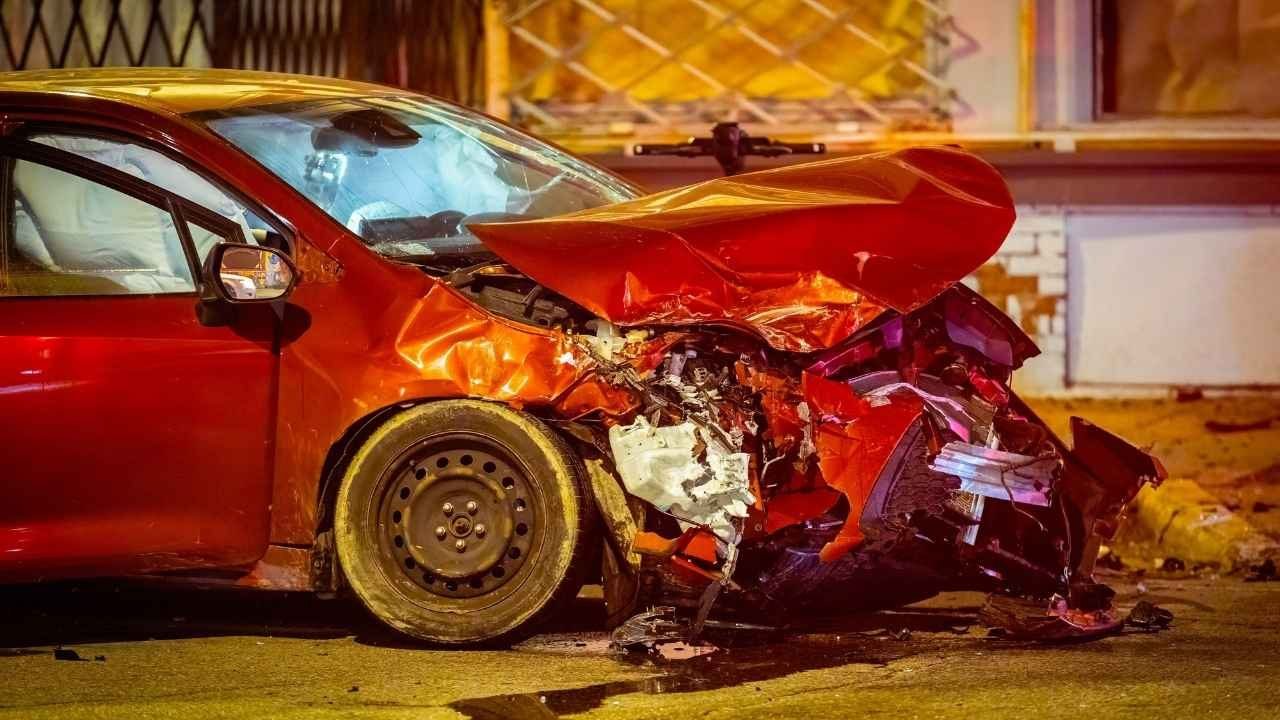
Imagine this: You drive your brand-new car off the lot, the scent of fresh leather still in the air. Three months later, you’re sitting at a red light, and suddenly—CRASH. You’re okay, but your car is crumpled. The insurance adjuster delivers the bad news: your car is a total loss. They hand you a check for $22,000.
The problem? You still owe $28,000 on your loan. You now have no car and a $6,000 bill for a vehicle you can’t even drive.
This terrifying scenario happens to thousands of drivers every year, and it’s exactly why understanding auto insurance with gap coverage isn’t just a financial tip—it’s a financial necessity.
Table of Contents
In this comprehensive guide, we’re going to strip away the insurance jargon and look at gap coverage through the lens of real people, real money, and real-life disasters. By the end, you’ll know if you need it, how to buy it without getting ripped off, and how to ensure you’re never left holding the bag for a car that’s already gone.
What Is Auto Insurance with Gap Coverage? (And Why “Full Coverage” Isn’t Enough)
Let’s start with a common misconception. Many drivers believe that if they have “full coverage” auto insurance, they are completely protected. Unfortunately, that’s not entirely accurate.
The “Full Coverage” Myth
In the insurance world, “full coverage” isn’t an official policy. It’s usually slang for a combination of Liability, Collision, and comprehensive insurance.
- Collision pays for damage to your car from an accident.
- Comprehensive covers theft, vandalism, or acts of nature (like hail or flooding).
However, both Collision and Comprehensive only pay for the Actual Cash Value (ACV) of your vehicle at the time of the loss. ACV is essentially the resale value of your car right now. And here’s the kicker: cars depreciate like a rock falling off a cliff.
Defining the “Gap”
This is where Guaranteed Asset Protection (GAP), or gap coverage, steps in. It is an add-on to your primary auto insurance policy designed to cover the difference between what you owe on your auto loan and what your car is actually worth.
The Formula:
Insurance Payout (ACV) + Gap Coverage = Remaining Loan Balance (or close to it).
If you have standard auto insurance, you get the ACV. If you have auto insurance with gap coverage, you get the ACV plus the money to satisfy the loan.
How It Works: A Hard Look at the Numbers
Let’s visualize this with a realistic scenario. According to Kelley Blue Book, a new car loses roughly 20% of its value the moment you drive it off the lot.
The Scenario:
- Purchase Price: $35,000
- Down Payment: $2,000
- Loan Amount: $33,000
- Timeline: 1 year later (Car totaled in accident)
- Car’s Current Value (ACV): $25,000
- Remaining Loan Balance: $30,000
| Coverage Type | Insurance Payout | Amount You Still Owe | Out-of-Pocket Cost |
| Standard Auto Insurance (Full Coverage) | $25,000 | $30,000 | $5,000 |
| Auto Insurance WITH Gap Coverage | $25,000 + $5,000 (Gap) | $30,000 | $0 |
As you can see, without gap coverage, you are paying $5,000 for a car you no longer possess. With it, you walk away debt-free.
Who Really Needs Gap Insurance? (The “Upside-Down” Checklist)
Not everyone needs gap coverage. If your car is paid off, or if you put a massive down payment down, you might be fine. However, there are specific red flags that signal you are a prime candidate for this protection.

You should consider gap coverage if:
- ✅ You made a low down payment: If you put less than 20% down, you are almost certainly upside-down on day one.
- ✅ You have a long-term loan (60+ months): The longer the loan, the slower you build equity. You’ll owe more than the car is worth for years.
- ✅ You leased your vehicle: Most leases require gap coverage because the leasing company doesn’t want to take the loss if the car is stolen or totaled.
- ✅ You rolled over negative equity: Did you trade in a car that you owed money on and add that debt to your new loan? You started this loan already upside-down.
- ✅ Your car depreciates fast: Luxury sedans, electric vehicles, and certain models lose value quicker than average (like the BMW 7 Series, which loses over 70% in five years).
- ✅ You drive a lot of miles: High mileage trashes resale value faster than average.
Pro Tip: A good rule of thumb is the “80% Rule.” If you financed 80% or more of the vehicle’s value, you should strongly consider gap coverage.
The Real Cost: How Much Does Gap Coverage Add to Your Auto Insurance?
One of the biggest reasons people skip gap coverage is that they assume it’s expensive. They picture the dealership trying to sell it to them for $700 or $800 and think, “I’ll take my chances.” But here’s the secret the dealership doesn’t want you to know: Adding gap coverage to your existing auto insurance policy is dirt cheap.
Dealership vs. Insurance Company: The Price Gauntlet
Where you buy gap insurance matters more than almost any other factor.
| Provider | Typical Cost | Payment Structure | The Catch |
| Car Dealership | $500 – $1,500 | One-time fee (rolled into loan) | You pay interest on it for the life of the loan. If you have a 6-year loan, that $600 gap policy could cost you $900+ with interest. |
| Bank / Credit Union | $400 – $700 | One-time fee or financed | Often cheaper than dealers, but still a lump sum. |
| Auto Insurance Company | $20 – $100 / year | Monthly premium add-on | Cheapest option. Usually $2 to $20 per month. |
According to the Insurance Information Institute, buying gap insurance from your auto insurer costs about $20 a year. Yes, you read that right. For the price of a pizza dinner, you can protect yourself from thousands in debt.
State-by-State Snapshot
Costs vary by location due to risk factors. Here is a look at average annual gap add-on costs in 2025 :
- Texas: $69
- California: $95
- Florida: $50 (Low due to competitive market, though full coverage is high)
- New York: $192 (Higher risk of theft/accidents)
- Michigan: $147
- Montana: $210 (Highest in the dataset)
The Takeaway: Always check with your insurance agent before signing dealer paperwork. You can often get a quote for gap coverage in under five minutes.
Also Read: GAP Insurance On A Leased Wheel
What Gap Insurance Does NOT Cover (The Fine Print)
To be a savvy consumer, you must know the limitations. Gap coverage is specific; it is not a warranty, and it won’t cover every expense.
Gap insurance typically does not cover :
- Your Deductible: If your deductible is $1,000, you still have to pay that. (Though some credit unions offer “GAP Plus” that includes deductible reimbursement ).
- Late Fees or Past-Due Payments: If you are behind on your loan, gap won’t catch you up.
- Extended Warranties or Credit Insurance: If you rolled a $3,000 warranty into your loan, gap might not cover that portion (depending on the policy).
- Rolled-Over Negative Equity: This is a big one. If you owed $5,000 on your old car and added it to this loan, some gap policies have limits on how much of that “carry-over” debt they will pay.
- Medical Expenses or Personal Injury: It only covers the physical damage to the vehicle loan.
5 Critical Mistakes Drivers Make with Gap Coverage
Navigating the world of auto insurance with gap coverage is tricky. Here are the pitfalls you need to avoid.
Mistake #1: Assuming the Dealership Has Your Back
Dealerships are not charities. When they sell you gap insurance, they often mark it up significantly. They might present it as the only option, but you have the right to buy it elsewhere. In fact, the Washington State Office of the Insurance Commissioner explicitly warns that dealership debt waiver agreements are often overpriced and cannot be canceled easily.
Mistake #2: Keeping It Too Long
Gap coverage isn’t meant to last the entire 72-month loan. It’s only useful while you are “upside-down.” Once the loan balance dips below the market value of the car (you have equity), you are paying for coverage you don’t need. Cancel it when you reach that break-even point.
Mistake #3: Not Asking About “Gap Plus” Programs
Some credit unions offer enhanced versions. For example, Oregon State Credit Union offers a plan that includes Auto Deductible Reimbursement (up to $500 per incident) and even $2,000 toward a replacement vehicle if you finance your next car with them. This turns a simple safety net into a loyalty perk.
Mistake #4: Thinking “Full Coverage” Includes Gap
As we established earlier, it does not. You must specifically ask for it. Your insurance company is not required to offer it to you unless you ask, though they are required to sell it if you do.
Mistake #5: Forgetting About the “Total Loss” Scenario
Drivers often think, “I’m a good driver, I won’t crash.” But what about theft? What about a hailstorm? Gap coverage kicks in for theft and comprehensive claims too, not just collisions.
Real-Life Horror Story: The $3,500 Lesson
Sometimes, the best way to understand insurance is through the school of hard knocks—even if it’s someone else’s.
In a viral TikTok video with over 274,000 views, car salesman Joseph Rodriguez shared a cautionary tale that perfectly illustrates the need for auto insurance with gap coverage.
A customer bought a Hyundai Elantra from him. He advised her specifically: “Do not leave that finance office without getting GAP insurance.” She declined.
A short time later—before she even made her first car payment—she totaled the car.
Her insurance company valued the destroyed Elantra at $12,500.
She owed the bank $16,000.
She walked into the dealership with a total loss letter and a $3,500 problem. She had no car, but she still had to pay off a loan for a car that was now scrap metal. The dealership tried to get her into a new car, but because she owed that $3,500 on the old loan, plus the price of a new car, her monthly payment skyrocketed beyond her budget.
Rodriguez’s message was clear: “This is why I tell you guys do not leave the dealership without GAP insurance.”
This isn’t just a story about a crash; it’s a story about negative equity and how quickly a small savings (skipping gap) turns into a massive financial burden.
Our Latest Guide About: Ethos GAP Insurance
Alternatives to Gap Coverage: What Are Your Options?
Maybe you’re reading this and thinking, “I don’t want to pay for anything else.” Fair enough. Here are a few alternatives to traditional gap coverage.
1. New Car Replacement Insurance
Some auto insurers (like Liberty Mutual or AAA) offer “new car replacement” coverage. Instead of paying ACV, they pay to replace your new car with a brand new one of the same make and model if it’s totaled within the first year or two. This is often more expensive than gap, but it gets you a new car, not just a paid-off loan.
2. Loan/Lease Payoff Coverage
This is essentially the same as gap, but sometimes with a cap (e.g., they will pay 25% over the ACV). Read the fine print to see the limit.
3. The “Big Down Payment” Strategy
If you put enough money down (usually 20% or more) and choose a short loan term (36-48 months), you can avoid being upside-down entirely, negating the need for gap.
4. Collateral Exchange (The Hail Mary)
If you are already in a total loss situation and don’t have gap, you can ask your lender about a collateral exchange. This allows you to move the remaining debt from the totaled car onto the loan for your replacement vehicle. It kicks the can down the road, but it keeps you from having to write a massive check immediately.
How to Buy Gap Coverage: A Step-by-Step Guide
Ready to protect yourself? Follow this roadmap.

Step 1: Check Your Current Auto Policy
Call your insurance company (Progressive, Geico, State Farm, etc.) and ask: “What is your monthly rate for GAP coverage add-on?”
Step 2: Check with Your Lender/Credit Union
If you belong to a credit union, check their rates. They often have competitive group rates that include perks like deductible reimbursement.
Step 3: Let the Dealership Make Their Offer
When you buy the car, let the finance manager give you their spiel. Listen to their price—just so you know how much more expensive it is compared to your insurance quote.
Step 4: Compare the “Total Cost.”
Remember, if the dealer charges $700 rolled into a 5-year loan at 7% interest, that $700 costs you about $830 by the time you pay it off. Compare that to your insurer’s $90/year, which you might only need for 2 years ($180 total).
Step 5: Read the Policy Limits
Ensure the policy covers the “total amount financed,” including any warranties or negative equity you rolled in. Some policies have a cap (e.g., they only cover up to 150% of the ACV).
Frequently Asked Questions
Q: Can I add gap insurance to my auto insurance after I buy the car?
A: Yes. You can usually add it at any time as long as you still have comprehensive and collision coverage on the vehicle. However, if the car is already a year old, you might be nearing the equity break-even point, so do the math first.
Q: Is gap insurance required by law?
A: No, but it may be required by your lender or lease agreement. If you are leasing, it is almost always mandatory. If you are financing, it is optional but highly recommended based on your down payment.
Q: What is the difference between GAP and Mechanical Breakdown Insurance (Extended Warranty)?
A: GAP pays off your loan if the car is destroyed. Mechanical Breakdown Protection (MBP) pays to fix the car when it breaks down. They are completely different products.
Q: Do I need gap coverage for a used car?
A: Possibly. If you bought a used car that is 2-3 years old, the steepest depreciation has already happened. However, if you financed it with a very high loan-to-value ratio (little money down) and the car is still worth less than you owe, then yes, gap is still relevant.
Q: Will gap insurance cover my medical bills?
A: No. Gap coverage is strictly for the physical damage loan on the vehicle. Medical bills are covered by Personal Injury Protection (PIP) or Medical Payments coverage on your health or auto policy.
Conclusion: The Smart Money Move
In the grand scheme of car ownership, auto insurance with gap coverage is one of the few products that offers immense value for a minimal cost. We’re talking about paying roughly $60 to $100 a year to insure against a potential loss of $5,000, $10,000, or more.
For the driver who leases, finances with little down, or buys a rapidly depreciating model, skipping gap coverage is essentially gambling. You are betting that your car won’t be stolen and you won’t be in an accident.
While that bet usually pays off, the downside risk is catastrophic.
Don’t be the person in the viral video, standing in a dealership lobby with a totaled car and a $3,500 bill. Call your insurance agent today, ask about the gap add-on rate, and drive away with true peace of mind.
Have you had an experience with a totaled car and gap insurance? Share your story in the comments below to help other readers learn from your journey!